Planning guide
The patch favor station, planned start to finish
Quantities, menu math, floor plan placement, and the failure modes we have already made so you do not have to.
The quantity math
Plan 2.5 patches per guest. Some guests take one, the maximalists take four, and 2.5 is where a real crowd averages out. For blanks, order for 85 percent of your RSVP yes-list plus three extras — attendance never hits 100 and the extras cover the officiant, the planner, and whoever asks with the saddest eyes. A 120-guest wedding therefore wants roughly 300 patches and about 105 blanks. We run this math for every station, but knowing it helps you sanity-check any vendor.
Menu design beats menu size
Forty-five well-chosen patches outperform ninety random ones. The menu needs four food groups: botanicals (the volume seller at weddings), letters and numbers (people build initials and dates), hearts and romance motifs, and you-two specifics — the dog, the city where you met, the drink from your first date. That last group is what strangers photograph.
Where the table goes
Between the bar and the seating, never past the dance floor. Guests browse with a drink in hand during cocktail hour; they do not leave a dance floor for retail. Corner placement with two open sides handles flow best, and the station wants light — under-lit favor tables die after sunset unless the venue lighting covers them, which we confirm on the walkthrough.
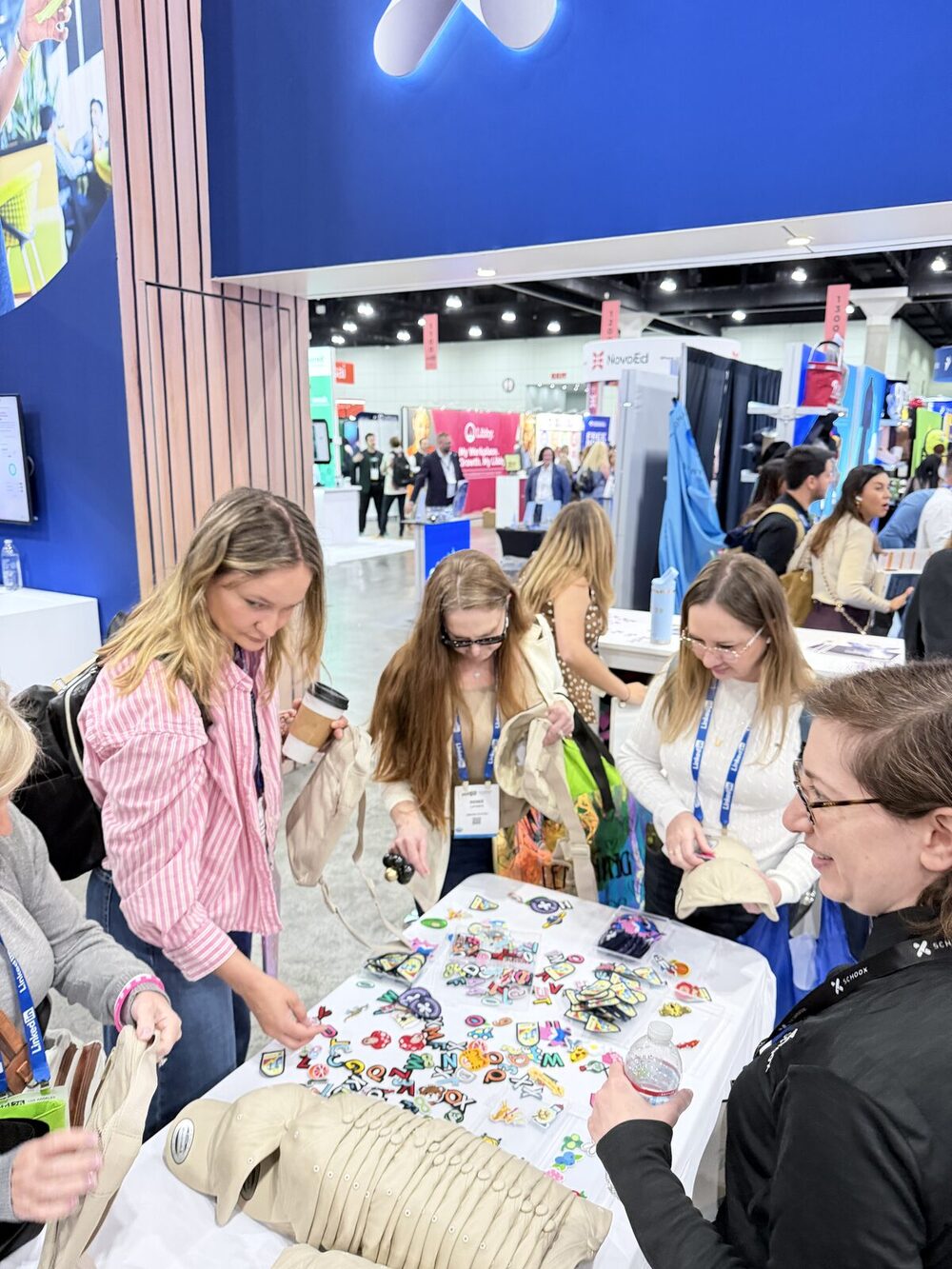
The three classic mistakes
One: opening the station after dinner, which loses the entire cocktail-hour wave. Two: buying beautiful blanks with unpressable fabric — always check with your crew before ordering that gorgeous waterproof tote. Three: no reserve stock of the hit patches; every menu has two breakout stars, and we hold spares of our predictions so the 10pm guests get real choices too.
Blanks that earn their table space
The favor table is not a garment store; it is an edit. Natural canvas totes carry the volume — flat surface, honest fabric, takes any patch on the menu. Cotton bandanas are the surprise second seller: they patch in seconds, cost the least, and half of them end up on dogs, which your photographer will thank you for. Add a short stack of zip pouches for the guests who want something small, and stop there. Every blank you add past four types slows decisions without raising joy. The one submission we accept happily: guests’ own pieces. The best man’s broken-in denim, a mother’s canvas market bag — pressing onto something someone already loves has a hit rate the favor table itself cannot match.
Who runs it, and how fast
The station staffs with two: a stylist working the table, helping guests compose, and a presser keeping the machine in constant motion. Each patch takes twenty to thirty seconds under heat, so the presser is never the bottleneck — composition is, and that is what the stylist compresses. Together they move a steady wave through the station all night, with claim cards for anyone who would rather dance now and collect later. The pair also handles the unglamorous parts: restock, straightening the menu after every browsing wave, and gently steering the fifth-cocktail guest away from pressing a patch on upside down. That last service is undefeated.
What moves the price, in order
Three levers set the number, and they are not equal. Hours is the big one — every staffed hour carries crew cost, so a cocktail-hour-plus-dance-block window costs meaningfully more than cocktail hour alone. Patch volume is second; the per-guest average above is the honest planning figure, and cutting the menu quality to save there is the one economy we advise against. Distance is third and binary: inside our OC/LA/SD range, no line item; outside it, a flat travel fee. Guest count, interestingly, barely moves the station cost at all — it moves the blanks. The full breakdown with numbers attached lives on the cost answer.
Signage does more than you think
A favor station with no signage gets treated like a display and left alone; guests genuinely worry they are not allowed to touch it. Three small signs fix everything. The first names the thing — “patch bar, on us, take one home” — because “free” and “for you” are the two facts a browsing guest needs before committing. The second sets the clock: “about two minutes, pressed while you watch,” which pulls in the guests who assumed there was a wait. The third goes at the end of the table with the couple’s story patches — the dog, the city, the drink — and one line about each, turning the menu’s oddest patches into its most requested. We print all three to match your paper suite if you send the files; it is a small touch that makes the station look designed into the wedding rather than parked at it.
Want this playbook run for your date? Start the quote — the plan comes with it. Costs are itemized on the pricing page.